



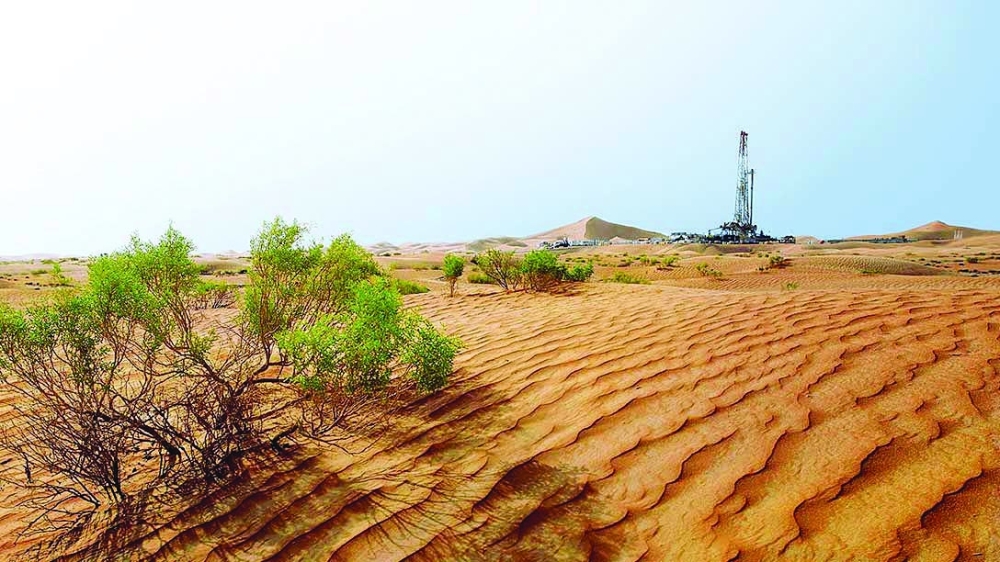





Oxy Oman, the wholly owned subsidiary of US-based multinational Occidental Petroleum, recorded a nine per cent uptick in hydrocarbon production from its expansive portfolio of upstream assets in the Sultanate of Oman in 2025. Output encompassing crude oil, natural gas and condensates climbed to 72K barrels of oil equivalent per day (boe/d) last year (corresponding to its equity entitlements), up from 66K boe/d in 2024, the company stated in its 2025 Annual Report.
In the Sultanate, Oxy is the operator of Blocks 9, 27, 53 (Mukhaizna Field), 62 and 65, and has additional interests in Blocks 30, 51 and 72, which are in the exploration phase. Its combined upstream acreage spans around 24,300 sq kilometres (6 million gross acres), featuring an estimated 10,000 potential well inventory locations.
Development capital allocated by the company across this sizable portfolio totalled around $400 million, with as many as 120 wells drilled during the year, while projects were advanced to support ongoing development and enhanced oil recovery (EOR) operations, Oxy stated.
Significantly, cumulative output from Block 9, a core upstream asset operated by Oxy with a 50 per cent working interest, has so far surpassed 853 million gross barrels since the start of operations — a milestone attributed to “successful exploration, continuous drilling improvements and EOR projects”, the company said.
Block 9 remains a mature but strategically important producing asset, contributing a notable share of Oman’s oil output and expected to remain in production for decades through ongoing reservoir management and enhanced recovery techniques.
Omani upstream energy company OQ Exploration and Production (OQEP) holds a 45 per cent interest in Block 9, with Kistos Energy holding the remaining 5 per cent (acquired recently from Mitsui E&P Middle East).
Another notable highlight of Oxy’s 2025 operational performance is the Mukhaizna Field in Block 53, home to a major pattern steam flood project for EOR that utilises some of the largest mechanical vapour compressors ever built.
“Since assuming operations in the Mukhaizna Field in 2005, the company has drilled over 3,600 new wells and has substantially increased production to deliver over 662 million gross barrels, while maintaining a strong commitment to operational excellence, environmental stewardship and community engagement,” Oxy noted in its Annual Report.
Last year, Oxy signed a 15-year extension of its Block 53 contract, a move anticipated to generate substantial value for all stakeholders.
Importantly, the company added around 7 million barrels of oil equivalent (MMboe) in proved reserves from its Oman portfolio last year — in line with Occidental’s global strategy to bolster its reserves.
Commenting on this strategy, Vicki Hollub, President and Chief Executive Officer of Occidental Petroleum, added: “Each year, we have continued to extend and improve organically. We strive to add at least as many reserves as we produce. At the end of 2025, Oxy’s worldwide proved reserves totalled 4.6 billion BOE. Proved reserve additions included extensions and discoveries totalling 340 million BOE, mainly in the Permian Basin, and additions from infill development projects of 115 million BOE, primarily in the Permian and DJ Basins. This resulted in a 107 per cent organic reserves replacement ratio and a 98 per cent all-in reserves replacement ratio.”
Oman Observer is now on the WhatsApp channel. Click here


